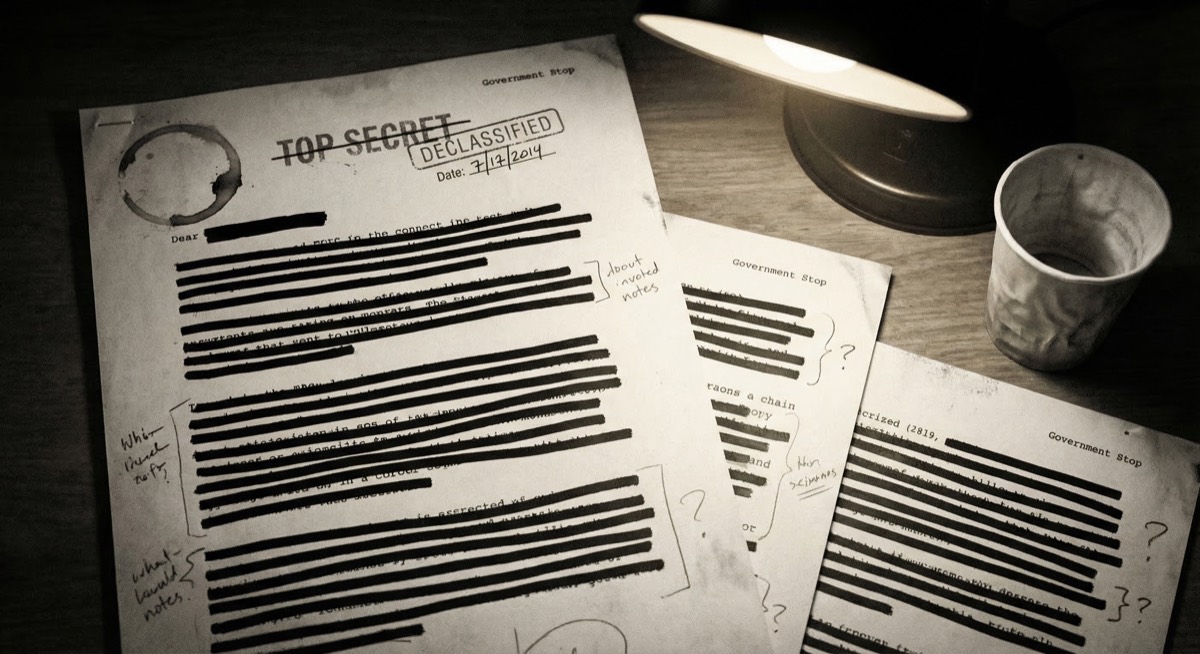
In the lexicon of intelligence and special operations, an asset is a resource — human or technical — that can be deployed to collect information or accomplish objectives that conventional means cannot. A psionic asset is a person trained to access information through anomalous cognition: perception that operates beyond the normal constraints of time, space, and physical proximity.
The term entered use during the classified years of programs like Project STARGATE, where military and intelligence agencies didn't call their trained viewers "psychics" — a word carrying too much popular baggage. They used operational language: assets, sources, collection capabilities.
The Intelligence Context: Why Governments Invested
The U.S. government's investment in psionic research wasn't ideological — it was competitive. Beginning in the early 1970s, intelligence reports indicated that the Soviet Union was devoting significant resources to what they termed "psychotronics": the application of consciousness-related phenomena to intelligence collection, influence operations, and potentially weapons development.
The 1972 DIA report Controlled Offensive Behavior — USSR documented Soviet research into psychokinesis, telepathy, and remote sensing. The report was classified Secret and circulated within the intelligence community, triggering the authorization for what would become the SRI remote viewing program.
The reasoning was straightforward: if the Soviets were developing a capability to observe classified facilities or track personnel through anomalous means, the United States needed both a defense and an equivalent offensive capability. Remote viewing wasn't treated as mystical. It was treated as a potential intelligence gap.
What Training a Psionic Asset Involves
The STARGATE program's operational viewers — based at Fort Meade, Maryland under the Defense Intelligence Agency — were not selected for pre-existing psychic ability. They were selected for psychological stability, discipline, and the ability to work under intelligence-operational pressure. Their anomalous abilities were then trained using the CRV protocol developed by Ingo Swann.
Phase 1 — Protocol Discipline
Before any anomalous data can be collected, the viewer must master the mechanics of the CRV session structure. This means learning to produce ideograms reflexively, recognize and declare analytical overlay (AOL) in real time, and maintain the discipline not to "front-load" — allowing prior knowledge or inference to contaminate session data.
This phase is purely procedural and typically takes four to eight weeks of daily practice.
Phase 2 — Signal Recognition
Once protocol mechanics are established, the viewer begins to recognize the qualitative difference between genuine signal (anomalous perceptual data arriving through the CRV process) and internally-generated content (imagination, memory, wishful thinking). This distinction — signal vs. noise — is the most important skill in remote viewing, and the most difficult to teach.
It is developed through extensive feedback: completing sessions against blind targets and immediately comparing session data against the actual target. Over hundreds of sessions, the viewer builds pattern recognition for what their accurate impressions feel like versus what their errors feel like.
Phase 3 — Operational Tasking
An operational psionic asset can receive a target reference — a number, a name, a set of coordinates — and produce structured intelligence-quality data within a single session. They've learned to work across all CRV stages fluently, to move through the session without hesitating at AOL intrusions, and to distinguish which categories of data they're most reliable on.
At Fort Meade, operational viewers were tasked against real intelligence targets — often without knowing anything about the target's nature or the intelligence question being asked. This double-blind operational structure was essential for maintaining the data's credibility within the intelligence community.
The Continuum from Novice to Operational Asset
Capability Levels
- Novice: Learning protocol mechanics. Sessions show occasional accurate hits amid significant noise. Accuracy typically 20–35% on gestalt targeting.
- Developing: Protocol is procedurally solid. Signal recognition improving. Accuracy 35–50% on gestalt, beginning to produce useful sensory data.
- Intermediate: Consistent above-chance performance. Can target diverse categories reliably. Beginning to work operational-style targets.
- Advanced: Sustained accuracy across all CRV stages. Low noise ratio. Can produce operationally useful data against complex targets.
- Operational Asset: Field-deployable. Can work under pressure, against real unknowns, with intelligence-grade consistency.
The transition between levels is not linear — it's iterative. Viewers frequently plateau, experience regressions, and then break through to a new level of clarity. The STARGATE program's experience suggests that sustained above-chance performance typically emerges around the 100-session mark for dedicated practitioners.
Why Governments Invest in This Capability
Remote viewing offers something that no technical intelligence system can replicate: the ability to access information about locations or objects for which there is no communications signal to intercept, no satellite imagery of sufficient resolution, and no human source in position.
A communications satellite can be jammed. A human agent can be turned. A classified document can be encrypted. None of these countermeasures are relevant to an operational remote viewer working against a coordinate.
This is not speculative. The STARGATE program's documented operational history includes sessions that produced accurate intelligence on underground facilities, mobile assets, and personnel movements that were later confirmed by independent technical collection.
How Anyone Can Begin This Training Path
The most significant legacy of the STARGATE program's civilian aftermath is the democratization of CRV training. The viewers trained at Fort Meade — including Joe McMoneagle, Lyn Buchanan, Paul Smith, and others — went on to teach the protocol to thousands of civilians after the program's declassification.
Their consistent finding: the protocol works for ordinary people. You don't need to be psychic. You need to be willing to practice systematically, accept honest feedback, and resist the temptation to over-interpret your sessions.
The barriers to entry have never been lower. Where a 1990s student needed to travel to a workshop, pay thousands of dollars, and wait months for session feedback, modern training tools can provide blind targets, immediate feedback, and longitudinal tracking from anywhere in the world.

Ready to experience the protocol yourself? Psionic Training is the only AI-scored CRV training app built on the declassified STARGATE methodology.
Begin Training →Intel Briefings
Stay in the signal: analysis of declassified research, remote viewing science, and new findings. No noise.