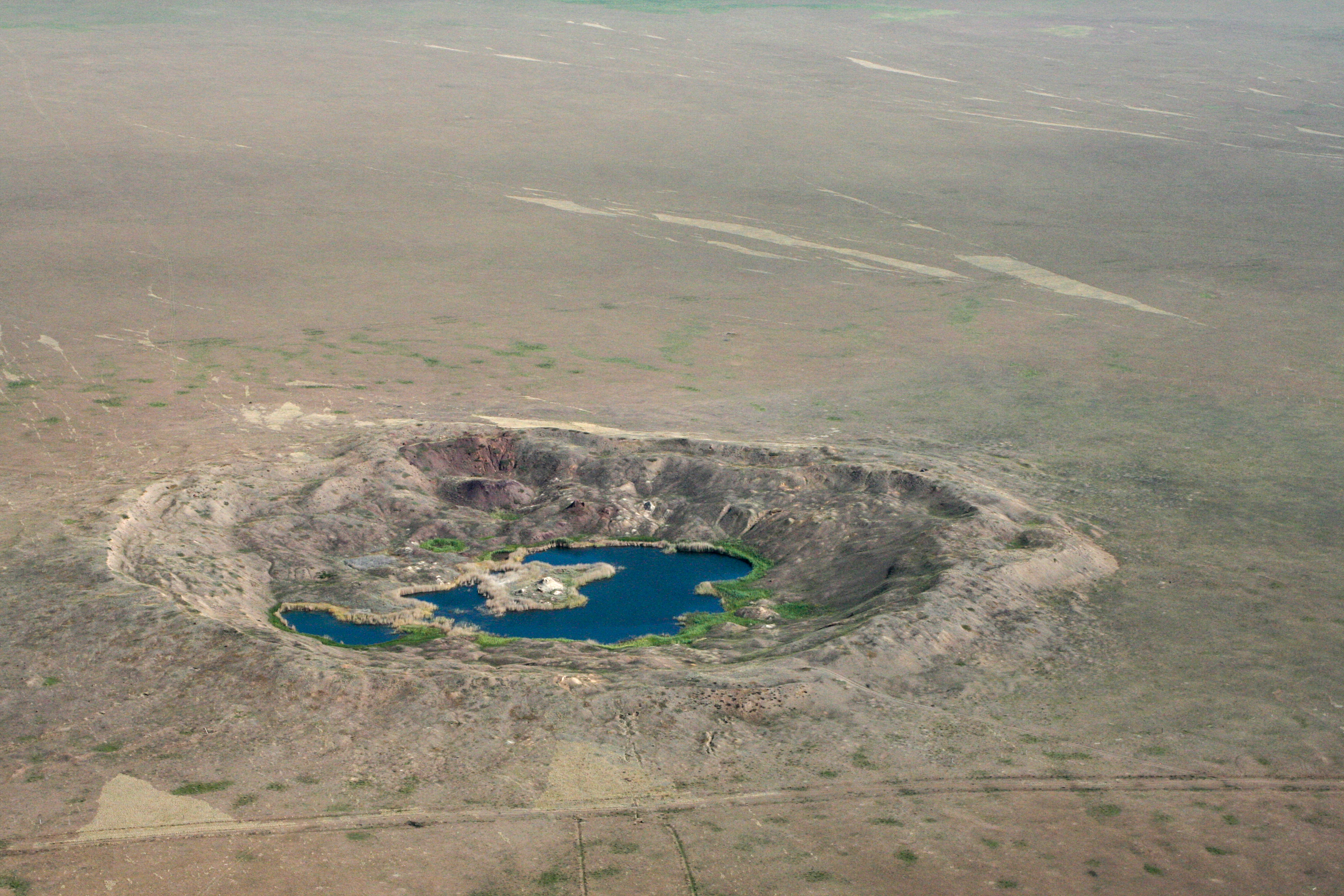
The target was a location in the Soviet Union the CIA had codenamed PNUTS: a suspected underground nuclear testing facility near Semipalatinsk, in what is now Kazakhstan. The agency had some satellite imagery, but it was fragmentary. What they needed was detail — structural information, construction specifics, the kind of granular intelligence that a satellite passing at orbital velocity cannot supply. So they gave a remote viewer named Pat Price a piece of paper with geographic coordinates, told him it was a research and development facility, and asked him to describe it.
Who Pat Price Was
Price was not a scientist or a government employee. He was a former police commissioner of Burbank, California, who had served in local government before retiring. During his time in law enforcement, Price had reportedly used what he described as a psychic ability to locate suspects and missing persons. He did not advertise this. According to Puthoff and Targ's accounts, Price's colleagues on the force were aware of his claims and regarded them with a mixture of curiosity and discomfort. Price himself treated the ability as a practical tool, not a spiritual gift. He approached it the way a mechanic might approach an unusual aptitude for diagnosing engine problems: it worked, he used it, and he did not spend much time theorizing about why.
Price came to the attention of physicists Harold Puthoff and Russell Targ at the Stanford Research Institute through an unusual route. He had read a magazine article about their early remote viewing experiments and contacted them directly, offering to demonstrate his ability. Puthoff and Targ were skeptical but agreed to test him. In their initial experiments, Price's accuracy was striking enough that they brought him into the program as a regular subject. He had come to the attention of physicists Harold Puthoff and Russell Targ at the Stanford Research Institute, who were running early remote viewing experiments under CIA funding — part of what would grow into Project STARGATE.
What made Price unusual among the early SRI subjects was his confidence and specificity. Where other viewers might report vague impressions of shapes or colors, Price would describe structures, read labels, and identify functional details of the targets he was viewing. He approached each session with the directness of a man who had spent years making decisions under pressure. Puthoff later described Price as the most naturally talented remote viewer they ever worked with, a characterization that carries weight given that Puthoff also worked extensively with Ingo Swann.
The Session
The protocol was spare. Price was given the coordinates. No images, no descriptions, no context beyond the brief that it was a research facility. The CIA's representative at the session had set a private threshold: if Price described either the large overhead crane at the site or the unusual derrick-like structures in their satellite imagery, they would consider it worth pursuing.
The coordinates provided to Price corresponded to a location in the remote Kazakh steppe, thousands of miles from anything he could have personally observed. The CIA had chosen this target specifically because it was a denied-access site where conventional intelligence collection had been only partially successful. Satellite imagery had revealed above-ground structures that suggested an underground facility, but the resolution and coverage were insufficient to determine what was actually happening there.
Price's description began with something that sounded almost mundane. He reported lying on his back on the roof of a two or three story brick building. From there, his account became specific. He described large metallic gantries, underground passages, heavy construction machinery consistent with crane mechanisms, and geometric structures unlike standard Soviet civilian or military buildings.
The Drawings and Specific Matches
Price produced hand-drawn sketches during the session that depicted the facility's layout as he perceived it. These drawings showed above-ground structures including gantry cranes and what appeared to be assembly buildings, along with indications of underground chambers and connecting tunnels. The drawings were filed with the session transcript and are now available through the CIA's FOIA electronic reading room.
The CIA's internal comparison between Price's drawings and the existing satellite imagery identified several specific correspondences. The large overhead crane that the CIA representative had set as his private benchmark was described by Price with sufficient accuracy that the match was considered significant. The derrick-like structures visible in the satellite photos corresponded to elements in Price's sketches. The general layout of the facility as Price described it was consistent with what the imagery showed, though Price's account included structural details that went beyond what the satellite data could confirm at the time.
Most notably, Price described underground components of the facility that were not visible in any satellite imagery available to the CIA in 1974. He reported large underground chambers, described equipment that appeared to be related to fabrication or assembly of large-scale components, and indicated that the underground portion of the facility was substantially larger than the above-ground structures suggested. Several of these descriptions were confirmed years later when higher-resolution satellite imagery and additional intelligence sources provided better coverage of the site. The underground details that Price described in 1974 were not verified through conventional intelligence channels until well after the session had been filed and cataloged.
The CIA's Formal Assessment
The CIA's internal assessment of the Semipalatinsk session, written by analysts who were not involved in the remote viewing program and had no institutional stake in its success, described the session as producing information that corresponded to known features of the target site. The assessment was careful in its language. It did not attribute Price's accuracy to psychic ability. It noted the correspondences, acknowledged that they exceeded what would be expected by chance, and recommended continued evaluation of the remote viewing capability.
This assessment is significant because of who wrote it and the context in which it was produced. CIA analysts in the 1970s were not in the business of validating paranormal claims. They were in the business of evaluating intelligence sources, and they evaluated Price's session the same way they would evaluate a report from a human asset or a signals intercept. The correspondences were documented. The gaps and errors in Price's description were also documented. The overall assessment was that the session had produced actionable information through a means that could not be conventionally explained.
Why This Case Matters
Skeptics of remote viewing often point to the problem of selective reporting: sessions that produce accurate information get remembered, while sessions that produce noise get filed away. The Semipalatinsk session has survived this critique better than most because it was the CIA's first deliberate operational tasking of the program. There was no large pool of failed attempts to filter out before this one.
The CIA's own assessment of the session, written by people who had every professional reason to be skeptical, describes specific correspondences between Price's description and the satellite imagery. The drawings exist. Anyone can look at them through the CIA's FOIA reading room. The program wasn't kept alive for 23 years on the basis of sessions that produced nothing. The Cold War intelligence logic that justified the funding required results, and Price's session was among the earliest and most compelling.
Price's Continued Work and Death
After the Semipalatinsk session, Price continued to work with SRI on both research experiments and operational taskings. He conducted additional sessions targeting Soviet military and nuclear facilities, and his work expanded to include other intelligence targets selected by the CIA. Puthoff and Targ considered him their most reliable viewer, and the CIA's continued willingness to task him with operational targets suggests that his subsequent sessions continued to produce results that the agency found useful, or at least interesting enough to continue pursuing.
Price also participated in the non-operational research program at SRI, including the series of "outbounder" experiments in which a researcher would travel to a random location in the San Francisco Bay Area while Price, back at SRI, attempted to describe the location. In nine such experiments, Price's descriptions were judged by independent evaluators to match the correct target location in seven cases. This hit rate was statistically significant and contributed to the body of evidence that Puthoff and Targ presented in their published papers.
In July 1975, approximately one year after the Semipalatinsk session, Pat Price died suddenly in Las Vegas. He was 56 years old. The official cause of death was a heart attack. The circumstances have been a source of speculation in the remote viewing community ever since. Price had been in apparent good health. He had traveled to Las Vegas to meet with individuals who, according to some accounts, were connected to the intelligence community. He died in his hotel room.
Puthoff and Targ have both stated publicly that they found the circumstances of Price's death troubling. They stopped short of alleging foul play, but they noted the timing and the context. Price had been providing intelligence on Soviet nuclear facilities. He had demonstrated an ability that, if genuine, represented a potential national security asset of considerable value. His death removed the most productive viewer from the SRI program at a point when the CIA was still evaluating whether to expand its investment.
Whether Price's death was a coincidence or something more is a question that cannot be resolved with available evidence. What is not in dispute is that his session files remain among the most studied documents in the declassified archive, and that the Semipalatinsk session in particular played a significant role in the CIA's decision to continue funding remote viewing research for another two decades.

Run your own coordinate session
PsionicAssist uses the same coordinate-based protocol that SRI developed in the 1970s. Submit your impressions, track your accuracy, and see how your results compare against verified targets.
Begin Training →Intel Briefings
Stay in the signal: analysis of declassified research, remote viewing science, and new findings. No noise.